Backend service
Lighter Liquidations
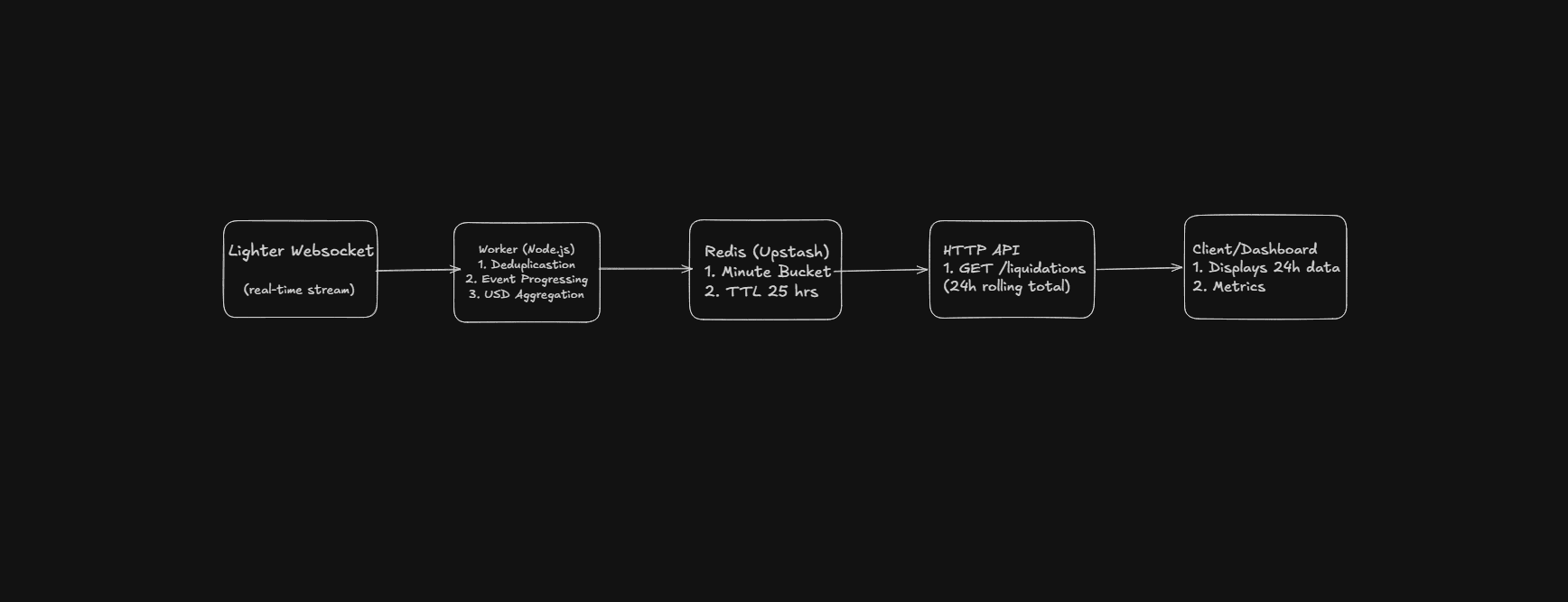
Streaming pipeline that ingests Lighter liquidations, dedupes replayed batches and serves a rolling 24h total.
- Node.js
- WebSockets (Lighter streams)
- Upstash Redis
Open source
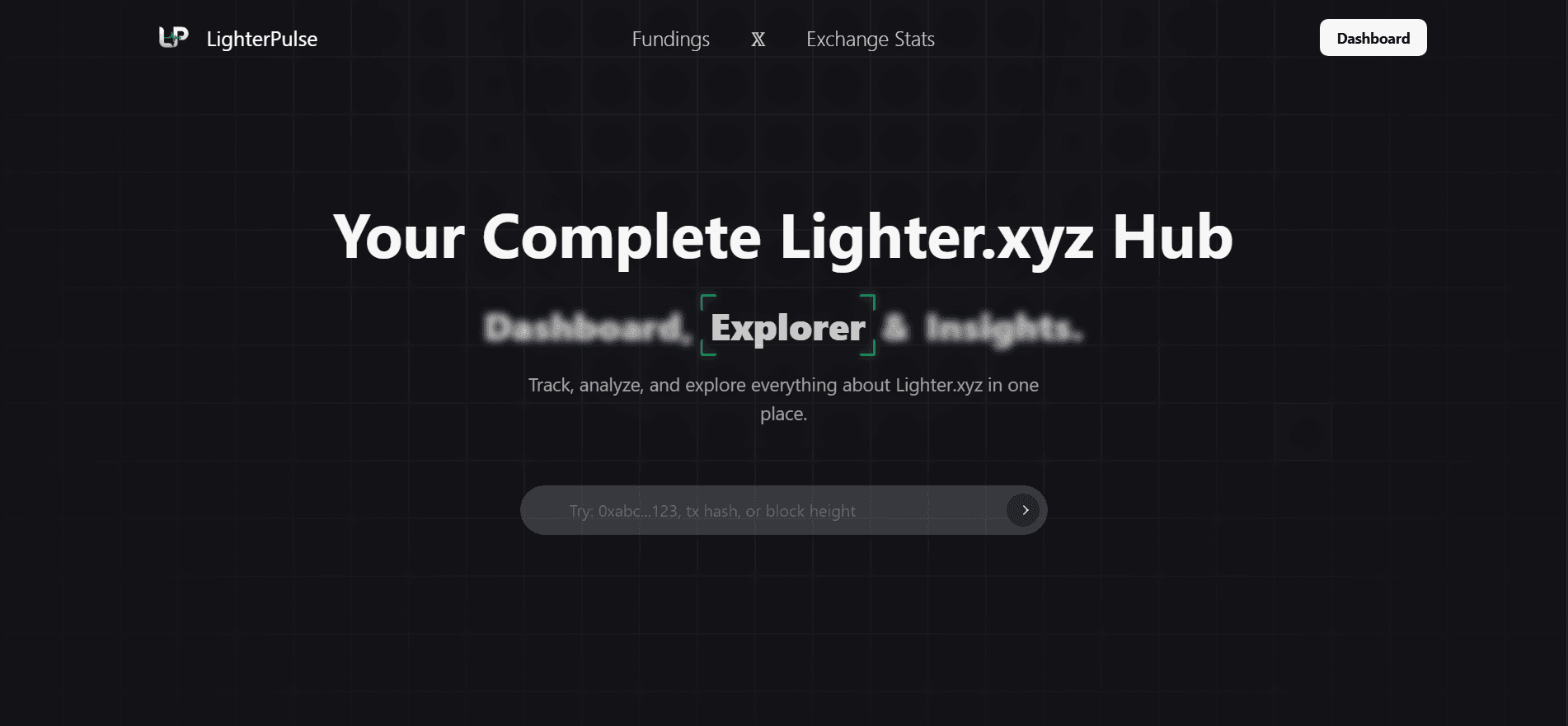
Analytics and exploration platform for the Lighter.xyz ecosystem, covering dashboards, a block explorer, exchange statistics, multi-venue funding comparison, and protocol announcements. Redis-backed caching and a split between live and cached data paths keep the UI responsive.
LighterPulse is a single product surface for traders and researchers who use Lighter.xyz. It combines account-level dashboards (including dynamic routes keyed by address), a block and transaction explorer with hash- and height-based navigation, an exchange statistics view built around a fixed set of KPI cards, a funding comparison workflow across Lighter and major perpetual venues, and an announcements area for protocol and product updates.
The implementation prioritizes predictable latency: metrics that can tolerate staleness are served through a cached layer, while prices, positions, and explorer results stay on shorter-lived or on-demand fetches. The UI uses progressive disclosure and lazy loading so heavy panels do not block first paint on constrained networks.
The app is structured on the Next.js App Router with feature-oriented route segments: marketing landing, dashboard with `[address]` dynamics, explorer with nested `tx/[txnhash]`, plus standalone sections for exchange statistics, funding comparison, announcements, and support. Shared layout and error boundaries (`error.tsx`, `global-error.tsx`, `not-found.tsx`) keep failures localized and recoverable.
Server components are used where data can be resolved on the server without shipping unnecessary client JavaScript. Client components own interactivity: search inputs, manual refresh controls, charts, and WebSocket-driven updates. API routes under `app/api` encapsulate server-only secrets (for example Dune and Upstash credentials) and return JSON consumed by the client or by server components via internal fetch patterns where appropriate.
Lighter.xyz public APIs supply account balances, positions, market metadata, and explorer-shaped data. Dune Analytics augments protocol- and chain-level metrics where SQL-defined datasets are the right source of truth. Funding comparison aggregates REST endpoints from Lighter, Binance, Bybit, and Hyperliquid; each integration is typed independently so schema drift on one venue does not break the others.
Upstash Redis backs a metrics endpoint (for example `/api/metrics`) with a roughly one-hour TTL for expensive aggregates: TVL, user counts, retention-style figures, and similar KPIs that power the exchange statistics cards. Trading-adjacent views that require fresher data bypass that cache or use shorter TTLs. Manual refresh actions revalidate selected queries and surface last-updated timestamps so users can reason about freshness.
WebSockets (configured via public `wss` URL where the protocol exposes streaming data) support live updates on views that benefit from push-style refreshes without polling loops. Where sockets are not used, the client batches parallel `fetch` calls and avoids waterfall requests on dashboard and explorer entry.
Tailwind CSS 4 and a small set of third-party UI primitives (Radix, Lucide, plus motion-heavy presentation components) keep styling consistent. Images and non-critical panels load lazily; route-level code splitting is largely inherited from the App Router's per-segment bundles.
Domain types live in dedicated modules (funding, explorer, exchange statistics, transactions, routes) so API mappers and UI props stay aligned. Input validation utilities guard address, hash, and numeric search parameters before hitting upstream APIs, reducing avoidable 4xx noise and improving error messaging.
SEO primitives (`sitemap.ts`, `robots.ts`) and metadata on layouts support discoverability for a public deployment. Environment variables are documented for local and hosted setups: API base URLs, WebSocket URL, Dune key, Upstash REST URL and token, and optional analytics IDs.
Backend service
Streaming pipeline that ingests Lighter liquidations, dedupes replayed batches and serves a rolling 24h total.
Backend service
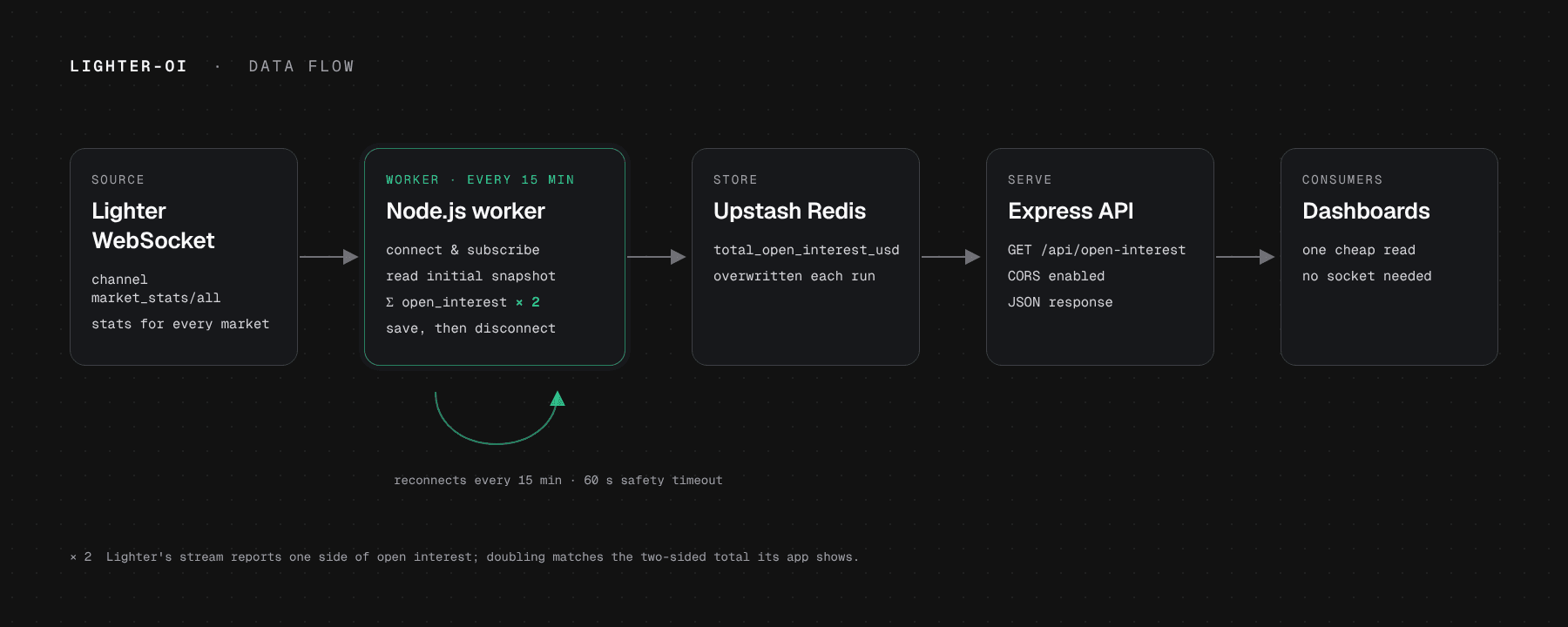
Snapshot service that totals open interest across every Lighter market every 15 minutes and serves it from one REST endpoint.