Product
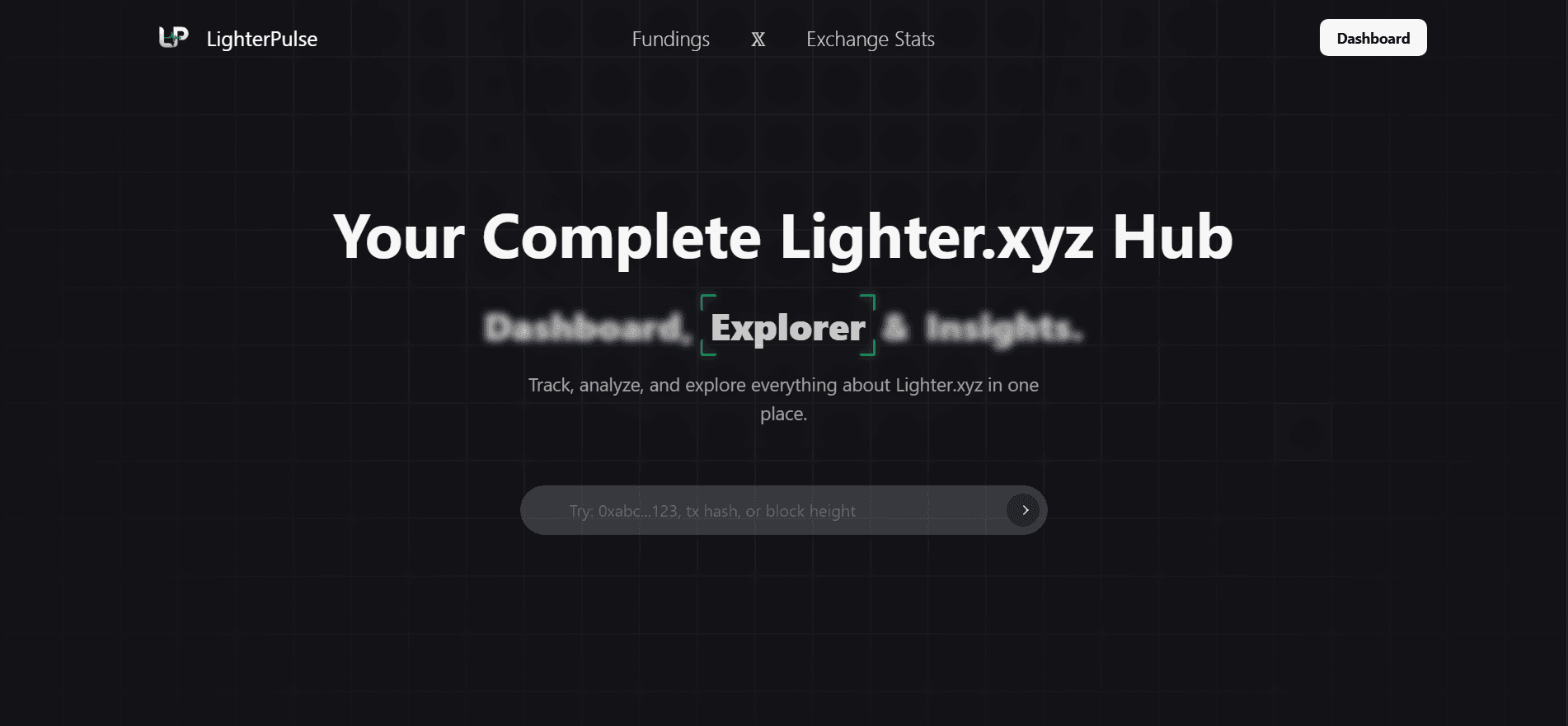
LighterPulse
Analytics hub for Lighter.xyz: dashboards, a block explorer, exchange stats and cross-venue funding comparison.
- Next.js
- TypeScript
- Tailwind CSS
Live
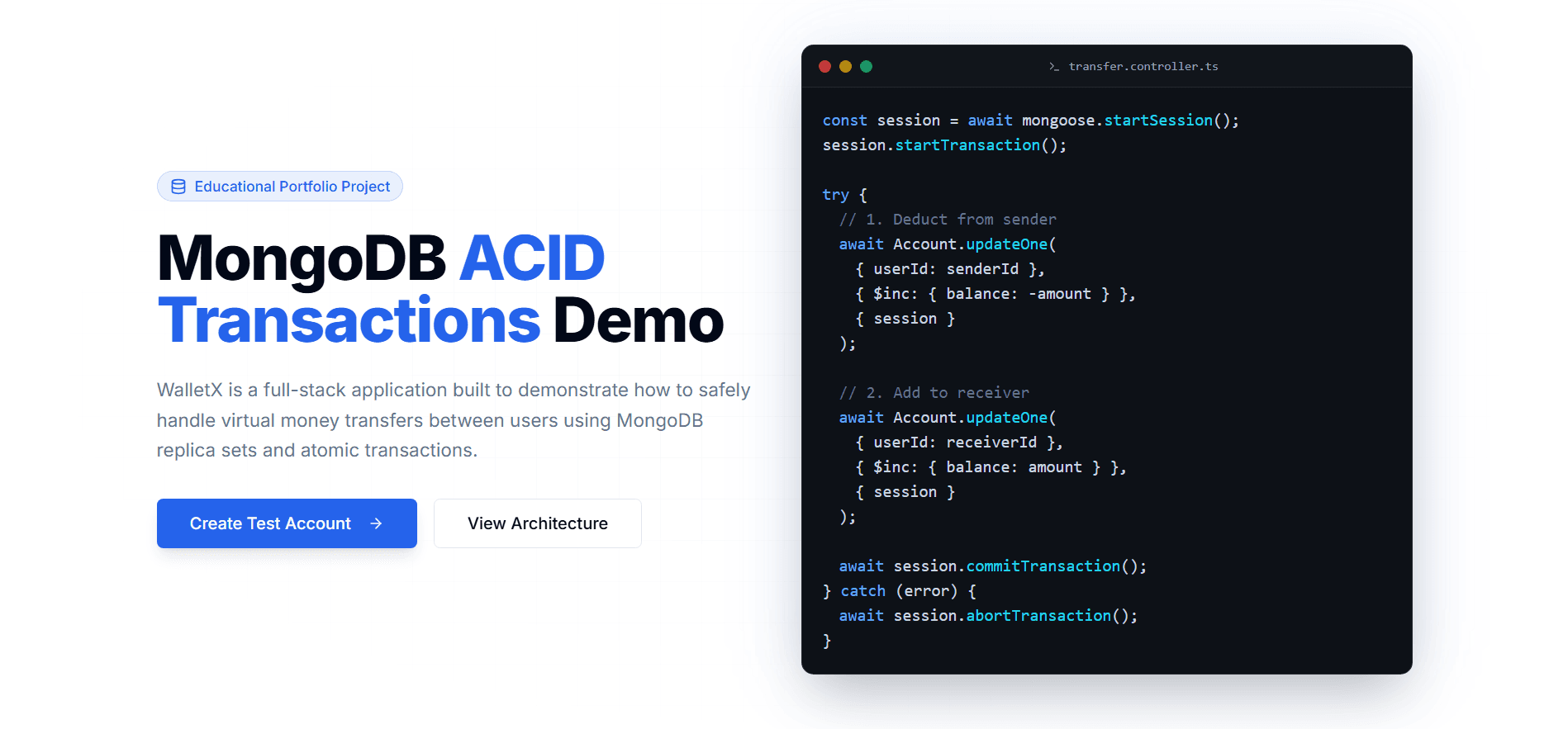
Full-stack FinTech-style wallet demo: P2P transfers, balances, history, and dashboard analytics. MongoDB multi-document transactions enforce ACID semantics so debits and credits stay consistent under concurrency (simulated funds, not real money).
WalletX is a full-stack FinTech-style application that simulates real-world wallet operations such as peer-to-peer transfers, balance management, and transaction history. The system is designed with strong consistency guarantees, ensuring that every transfer behaves like a real financial operation.
At its core, WalletX leverages MongoDB multi-document transactions to enforce ACID properties. All transfers are executed atomically using database sessions, preventing partial updates, double spending, or inconsistent balances even under concurrent requests.
Frontend is built with React + Vite using TypeScript, with TanStack Query for server state management and Recharts for analytics. The UI is component-driven with Tailwind and Radix, focusing on responsive and accessible FinTech-style design.
Backend follows an MVC architecture using Express and Mongoose. Core business logic is implemented in a transfer service that uses MongoDB sessions and multi-document transactions to ensure ACID compliance. JWT handles authentication, while Zod validates all inputs before execution.
A transfer involves debiting one account and crediting another. Without transactions, partial failures could corrupt balances. This was solved using MongoDB sessions and multi-document transactions to guarantee atomicity.
Concurrent requests or retries could result in duplicate transfers. The system enforces balance checks and executes all operations within a single transaction scope to maintain consistency.
Failures during transfer execution (server crash, validation error) must not leave the system in an invalid state. Transactions ensure automatic rollback on any failure before commit.
Long-running transactions can cause contention in MongoDB. Indexing and minimal query scope were used to keep transactions short and efficient.
Designed for developers and recruiters to demonstrate understanding of real-world financial system design, including transactional integrity, backend architecture, and secure full-stack application development.
Product
Analytics hub for Lighter.xyz: dashboards, a block explorer, exchange stats and cross-venue funding comparison.
Backend service
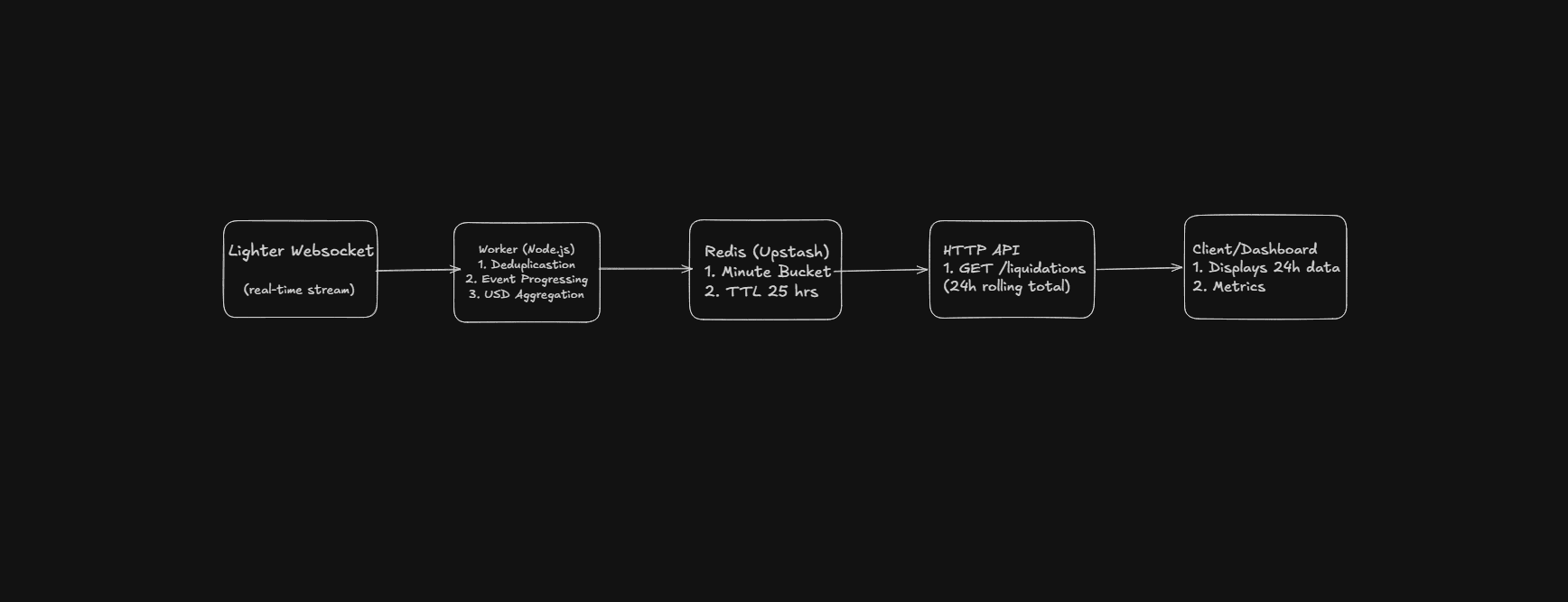
Streaming pipeline that ingests Lighter liquidations, dedupes replayed batches and serves a rolling 24h total.